)
)
Connect Ideas, Connect Materials: The Rise of Steel Reuse in Construction
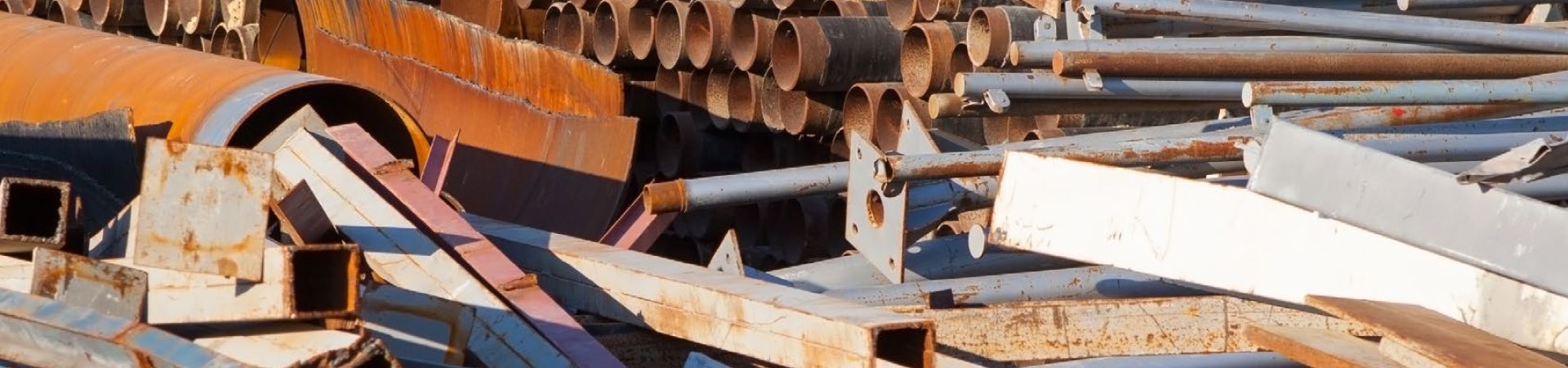
Structural steel has always been valued for its recyclability. But today, the conversation has moved beyond recycling alone. Increasingly, the focus is on reusing steel framed buildings in situ or reclaiming structural members for use in new projects (also referred to as urban mining), preserving their full structural value while dramatically reducing embodied carbon.
This shift represents more than a technical evolution. It signals a new mindset for the industry — one that recognises buildings not as static objects but as material banks, designed to adapt, evolve and reconnect with future projects.
A circular material for a connected industry
The drive to decarbonise the built environment is reshaping priorities across the sector. Reducing demand for new materials through reuse is increasingly seen as one of the most effective sustainability strategies available to designers and developers.
Steel is uniquely positioned to support this transition. Its strength, durability and predictable performance mean that structural members can often be reused with minimal processing. Unlike many other materials, steel retains its mechanical properties over time, allowing beams and columns to be redeployed in new structural applications once they have been inspected and verified.
The benefits go far beyond carbon savings. Reuse preserves the full embodied value of steel, avoids emissions from remelting and re-rolling, and reduces the demand for virgin material extraction and manufacturing.
In short, reuse represents the highest-value circular pathway for structural steel.
But unlocking this potential requires something equally important: connection across the supply chain.
Architects, engineers, contractors, developers and steel suppliers must collaborate more closely than ever before. Early engagement between designers and steelwork contractors is particularly critical to ensure reuse opportunities are identified early and integrated into the design process.
This kind of collaboration is transforming steel reuse from an experimental concept into a practical, scalable solution.
Adaptive reuse: extending the life of buildings
Alongside the reuse of individual steel members, the industry is also embracing adaptive reuse of entire structures.
Rather than demolishing existing buildings, project teams are increasingly retaining steel frames and reconfiguring them to meet new demands. This approach can include extending buildings vertically, inserting new floors or reworking layouts while keeping much of the existing structure intact.
Steel-framed buildings are particularly well suited to this type of transformation. Their high strength-to-weight ratio allows for long spans and open floorplates, enabling internal layouts to be reconfigured without major structural intervention.
In many cases, new steelwork can be bolted onto existing frames to create additional storeys or extensions, often with minimal impact on foundations thanks to steel’s relatively low weight.
The result is a highly adaptable building stock capable of evolving to meet changing urban needs.
Adaptive reuse is also gaining support from planning authorities, who increasingly recognise refurbishment and retention as an environmentally responsible alternative to demolition and new build.
Designing today for tomorrow’s reuse
As steel reuse becomes more widespread, designers are increasingly thinking about reuse from the very concept design of new buildings: to make reusing structural steel even easier!
The concept of design for disassembly is gaining traction, encouraging project teams to consider how structures might be dismantled and reused decades into the future. This can include using bolted connections rather than welded ones, standardising structural sections, and ensuring that components remain accessible for inspection and removal.
Digital tools are also helping drive progress. Building information modelling, material passports and improved traceability systems are making it easier to track the properties and history of structural components, enabling them to be confidently redeployed in new projects.
These developments are helping transform steel frames from one-off structural systems into long-term material assets.
Connecting innovation at Futurebuild
The shift toward steel reuse and adaptive reuse reflects a broader transformation across the built environment: a move toward collaboration, innovation and circular thinking.
Delivering net-zero buildings will require new ideas, new partnerships and new ways of working. It will require connecting disciplines that have historically operated separately (often at either ends of the building life cycle) and sharing knowledge across the entire construction supply chain .
This is exactly the kind of conversation Futurebuild exists to support.
By bringing together designers, engineers, contractors, developers and policymakers, Futurebuild creates a space where the industry can connect ideas, exchange expertise and accelerate the adoption of emerging practices like steel reuse.
It will be built through connection — reconnecting materials, reconnecting knowledge and reconnecting the industry around a shared commitment to sustainability.
And steel reuse is helping lead the way.
COME AND SPEAK TO US ON STAND J57 TO FIND OUT MORE.
https://bcsa.org.uk/resources/steel-for-life/