)
)
Connecting the dots for retrofit – we all have a part to play in shifting the system
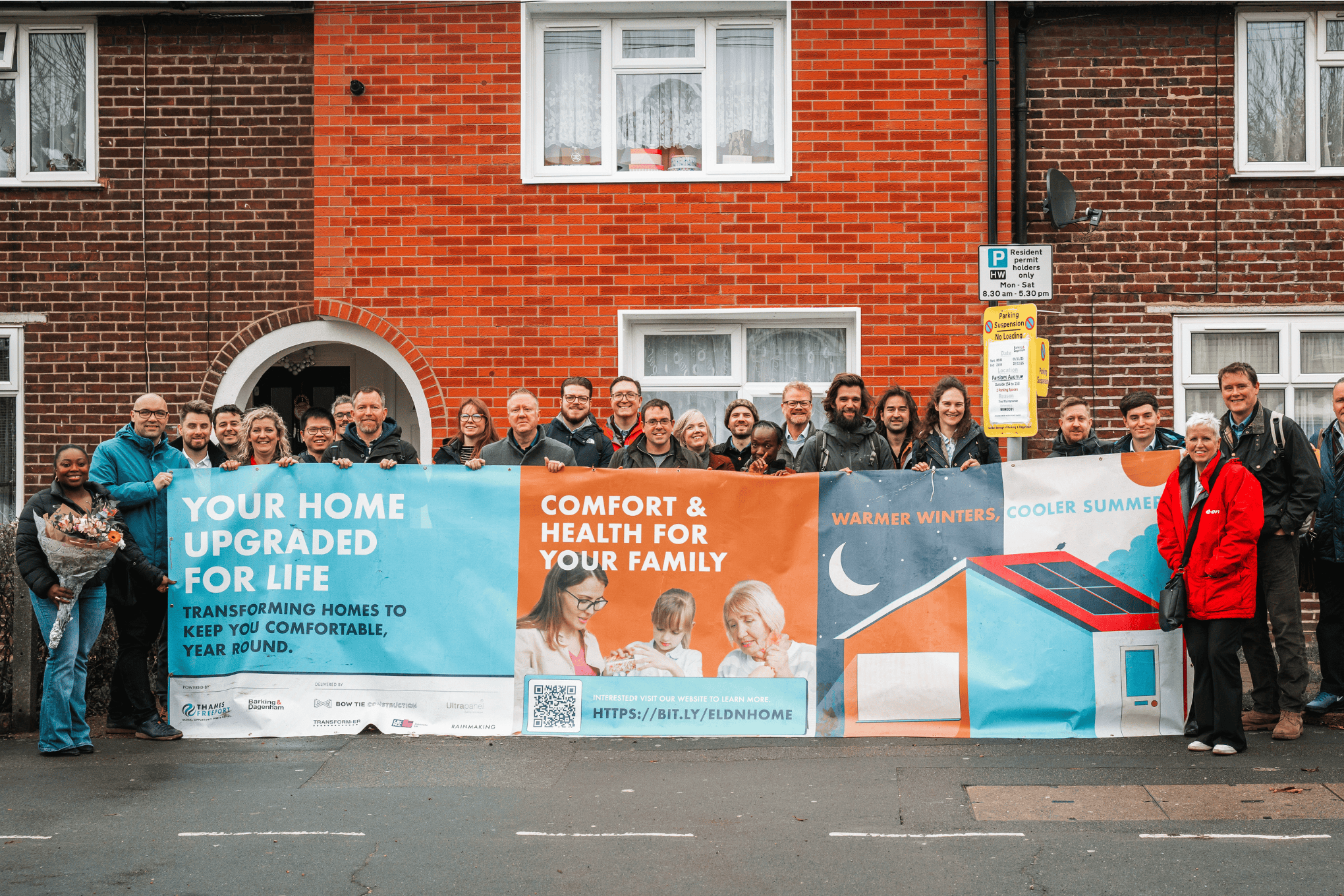
By Emily Braham, CEO of Transform-ER and Strategy and Operations Director at Energiesprong UK
The environmentalist Ayana Elizabeth Johnson says, “We already have the climate solutions we need, we just need to implement them.” In a retrofit context, I mostly agree. We have many of the technologies, innovations and approaches required spread across 1000s of brilliant people and organisations.
What we don’t possess is the ways of working to bring them all together into a thriving retrofit ecosystem that delivers scale, speed and quality. And that is going to require us to be bolder about relationships in retrofit, both between the people who work in it and between the different parts of the system, so it functions as a coherent whole.
Relationships matter in retrofit
I know what you’re thinking - it’s not new to highlight that better collaboration is core to unlocking better retrofit. But we’ve never quite made it click as a sector.
Over the last 18 years on retrofit’s frontlines, I’ve consistently seen the same ways of working resulting in the same outcomes – spiralling costs, slow delivery and poor-quality outcomes.
The frustrating thing is that it was easy to see where things were going wrong and what could be done differently – the business case wasn’t stacking up, residents weren’t engaged properly, performance wasn’t guaranteed. But every change we made had consequences with knock-on impacts for another part of the system and stakeholders were reluctant to change how “things have always been done.”
That's not because people are being difficult. Individual companies are rewarded for optimising their own piece of the puzzle - their own margin, their own risk, their own timeline - not for how well that piece fits with everyone else's. This leads to low trust between people and organisations, only compounding the issues.
Collaboration is critical – but not enough
Late in 2023, I was given a chance to do something about this. Through Innovate UK’s Net Zero Heat: Design Engineering Lab, ESUK came together with 12 other organisations – all who had seen the same thorny issues – to radically rethink retrofit by placing systems thinking and collaboration at its heart.
We asked the sector about their current perceptions of working with partners and the results were clear: relationships make or break retrofit programmes. While technical competency was ranked as important, the findings demonstrated that relational factors - such as empathy, integrity, and shared goals – were most crucial for fostering successful partnerships.
But our stakeholder research with landlords, suppliers and residents showed us something else too: retrofit's biggest barriers to scale aren't isolated operational problems - they're symptoms of a fragmented system. And no amount of goodwill between people fixes a system where the parts are working against each other.
From fragmentation to integration
When landlords hold poor-quality data, manufacturers can't plan production - so aligning that data must come first. When residents get poor communication, installers see higher drop-out rates - so clearer engagement with residents isn't a nice-to-have, it's what keeps programmes running. When procurement frameworks force everyone to compete on lowest cost alone, everyone ends up carrying more risk - so contracts need to reward people for working together and delivering value, not for underbidding each other.
None of these are people problems alone. They're also connection problems - barriers showing up wherever two parts of the system meet without anything designed to join them. And changing one piece of the puzzle alone does nothing.
Connecting the dots – what this looks like in practice
So, what does it look like if we connect the dots?
If we get the data right, we can build better business cases which helps landlords to access the right finance and find the right solutions for the right home.
If we aggregate large pipelines of similar homes, rather than one-off pilots, we can show the supply chain that the demand is there so they can invest in skills and manufacturing to unlock scale and quality.
If we change the way we procure, we can move from adversarial contracts that inflate costs and increase risk to alliances which operate under shared governance, shared risk and shared incentives from the outset.
If we bring residents along on the journey from day one - so they feel like retrofit is being done with them, rather than to them - we can reduce drop-outs and refusals which is one of the biggest causes of abortive costs.
If we measure performance, landlords and residents alike can be sure of outcomes and learning can be fed back into future projects so we can iterate further.
None of us can change the system alone
We have incorporated all these into Transform-ER’s new delivery approach, but we aren’t saying this is the only way to deliver programmes. And we also aren’t gate-keeping - we will be sharing our insights and learning along the way so that others can adopt the tactics that work and avoid our inevitable mistakes, and we’re open to hearing the same from others! Let’s transform retrofit – together.