)
)
Making lower carbon concrete standard practice: let’s not miss the opportunity
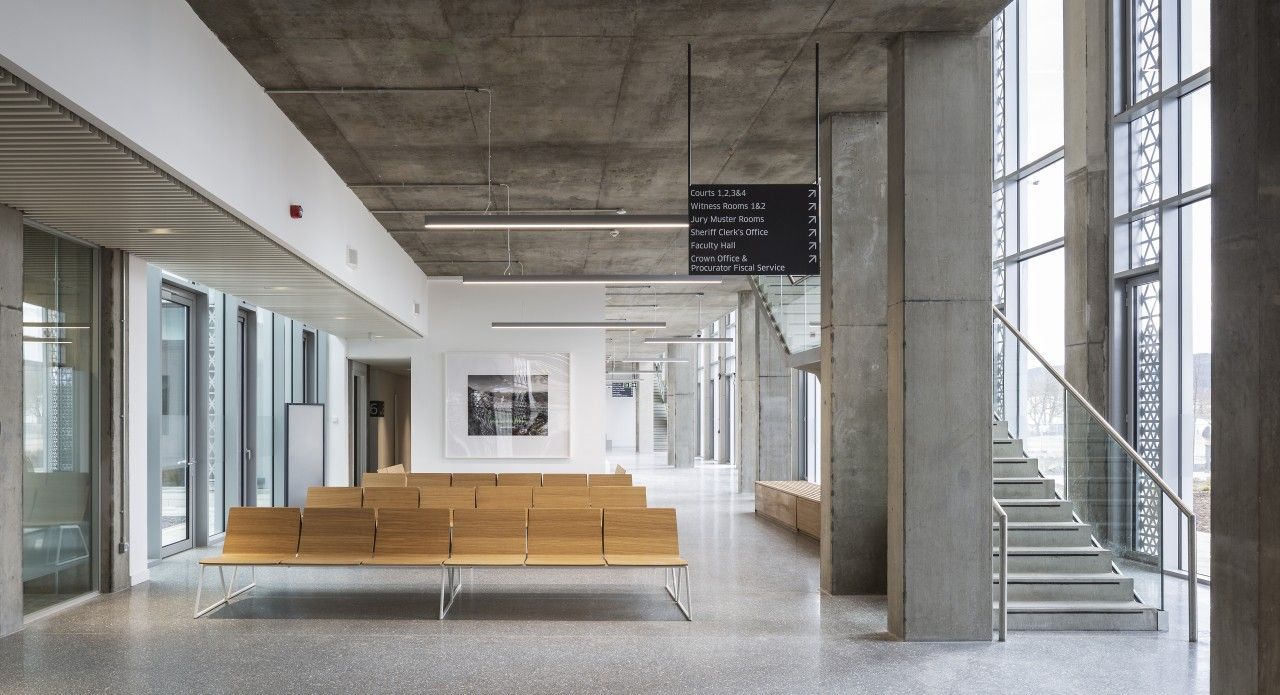
The UK is looking to construction to drive economic growth – through new homes, infrastructure and the renewal of our towns and cities. That ambition brings with it a simple reality: concrete will underpin almost every one of these assets.
Concrete is the most widely used construction material in the world. It shapes our buildings, our roads, our bridges and our energy infrastructure. If built environment professionals are serious about decarbonisation, then how we specify and procure concrete cannot remain a background consideration. It has to become a central commercial and design decision, considered as early and as deliberately as layout, massing or structural form.
Too often, carbon is addressed late in the process, and only once key material choices have already been locked in. By then, opportunities to reduce impact are limited to marginal gains rather than meaningful change. Using lower carbon concrete can deliver immediate carbon savings at scale, if it is addressed early enough in the briefing and specification stages.
Changes to the BS 8500 standards have widened the range of compliant lower carbon concrete mixes available, reducing the reliance on traditional cement without compromising performance expectations. These changes make lower carbon options easier to adopt within existing processes. The challenge now is less about technical capability, and more about consistency of demand and confidence across the supply chain to use what the standards already allow
Crucially, the majority of these lower carbon concretes are not experimental. They are already being produced, supplied and warranted by UK manufacturers, including members of the Mineral Products Association. The differences are in the chemistry, not the outcome. With the appropriate specification, these concretes can perform the same and meet the same structural requirements as traditional mixes.
Alongside changes to standards, the industry now has far better tools to describe and compare lower‑carbon concrete in a consistent way. Classification systems that rank the embodied carbon performance of concrete, combined with market benchmarking, mean that designers and clients can see what is already being supplied and how different options perform relative to the wider market. This visibility matters. It replaces assumption with evidence, reduces uncertainty at the point of specification, and gives project teams greater confidence that lower‑carbon choices are not outliers, but established and achievable within today’s supply chain.
And yet, despite this progress, market demand has not yet caught up with supply. The proportion of additional cementitious materials used in UK concrete has remained broadly stable for many years, consistently at around 30% of total cementitious content. But there remains headroom to go further by making greater use of approaches the industry already understands and delivers.
Too many projects still default to familiar specifications. Too often, lower carbon options are overlooked due to a lack of awareness, uncertainty within design teams, or procurement processes that prioritise precedent over performance. Commercial caution can creep in, even when cost premiums are minimal or non‑existent, simply because “this is how it has always been done”.
This is not a technical problem. It is largely a market and leadership one.
The good news is that this is beginning to change. A growing number of clients and developers are working collaboratively to build confidence, share evidence and normalise the use of lower carbon concrete across their portfolios.
Architects and engineers are central to this shift, helping to translate ambition into delivery by putting greater emphasis on carbon performance and material choices earlier in the design process.
Initiatives such as the Derwent‑led Accelerating Concrete Decarbonisation Group (ACDG) demonstrate what is possible when clients take a collective approach. By bringing together material suppliers, designers and developers, ACDG is helping bridge the gap between what the supply chain can already deliver and what projects are actually buying.
This collaborative approach is also being reflected at a national level. Through Advance Market Commitments, led by Innovate UK, clients are working together to send a clear demand signal for next‑generation lower‑carbon concrete — committing to buy innovative solutions once they meet agreed performance and carbon criteria.
At the same time, the Infrastructure Client Group is aligning major asset owners around shared commitments to accelerate concrete decarbonisation across UK infrastructure, using collective demand to drive consistency and confidence. The UK Low Carbon Concrete Group, of which the Mineral Products Association is a member, is bringing together industry, clients and policymakers to identify practical pathways for closing the emissions gap. Together, these initiatives show how coordinated action can help turn technical capability into mainstream delivery.
The lesson is clear. Innovation and standards have opened the door. Specification and procurement now needs to walk through it.
The materials already exist – and increasingly, so do the tools to describe and compare them with confidence. What is needed now is consistency of demand and openness across the supply chain to share data, experience and lessons learned.
In this context, choosing not to specify lower carbon concrete becomes a missed opportunity rather than a neutral decision. Making lower carbon concrete the default should not be seen as a future aspiration, but as a practical step the construction industry can take now to deliver a better built environment.
Futurebuild’s focus on connection across the industry and supply chains is timely. The shift to lower carbon concrete will not be driven by one actor alone, but by better alignment between clients setting expectations, designers specifying with confidence, contractors procuring intelligently and manufacturers supplying at scale.