)
)
From niche to norm - mainstreaming Passivhaus
Ann-Marie Fallon, Co-Director, Passivhaus Trust
What do Barratt London, Guy Martin, Homes England, and the UK Net Zero Carbon Building Standard all have in common?
They have all contributed to the increased recognition of Passivhaus over the last year and its growing mainstreaming in the UK.
Guy Martin
In February , Guy Martin’s House Without Bills aired on Channel 4. The 90-minute programme followed Guy working on a Passivhaus retrofit project in Greater Manchester.
Guy Martin commented: “I am about performance and efficiency, whether it’s turbo in engines or heating my house. To try to convert an existing house to this standard was a massive job because it’s all about build quality. All of these new builds, however many thousand new homes they’re planning on building every year for the next few years, they need to be built right. Because if we don’t build them right we’re going to have the same problem again. Maybe building to Passivhaus is the extreme but it is the gold standard. This is what housing standards need to be. Do it well, do it once.”
Greater Manchester’s Mayor Andy Burnham also visited the project and the programme brought Passivhaus to a much wider audience and has helped increase awareness of the Passivhaus standard.
Homes England
The health benefits of Passivhaus have recently been publicly acknowledged in the Introduction to Homes England’s Healthy Homes guidance published in November 2025. “Passivhaus is a well-established design and quality assurance system aimed at reducing energy demand, addressing the 'performance gap' of new buildings, and improving comfort levels for residents. ….There is significant overlap between a Passivhaus approach and the aims of Healthy Homes”.
Healthy Homes has been developed as a concise set of core specifications and good practice guidance for social housing providers. It offers guidance for Homes England-funded projects but is not a statutory requirement.
While full Passivhaus certification is not a requirement, there are significant similarities between the Healthy Homes ‘good practice enhancements’ and the Passivhaus standard. This means that Homes England recognises the health advantages of Passivhaus, and Passivhaus dwellings will automatically achieve ‘good practice’ enhanced status on specific healthy homes measures. These are cited as:
- Building fabric and energy performance
- Overheating
- Ventilation and indoor air quality
If you are developing a project that is seeking Homes England funding, by opting for the Passivhaus standard you will be able to demonstrate ‘Healthy Homes: Good practice enhancements’ in three key areas, which will be welcomed by Homes England as exemplars of good practice.
Barratt London
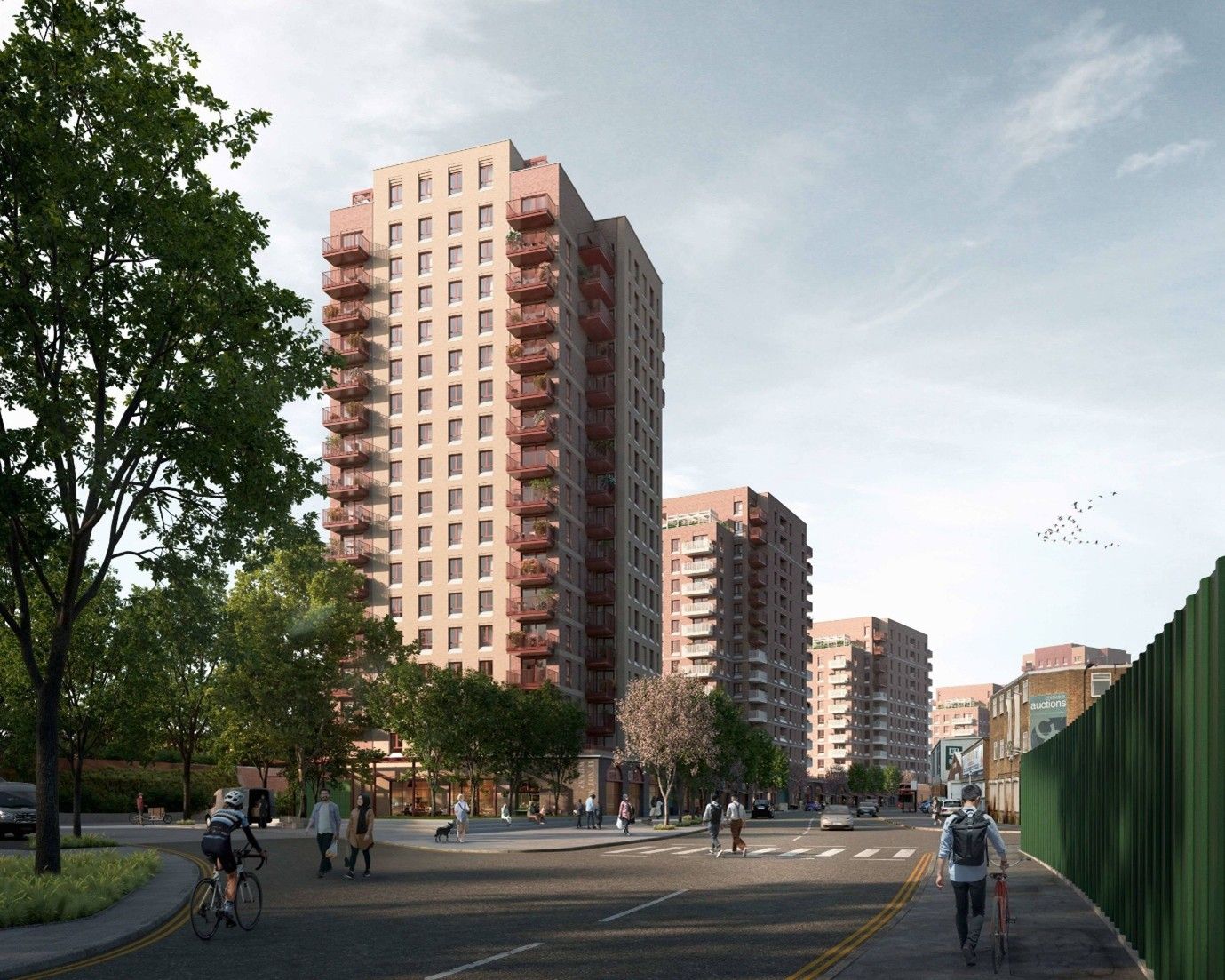
Barratt, the UK’s largest volume housebuilder, announced in May 2025 that all of its new residential schemes in London will be built to meet or exceed the Passivhaus standard, a model they call Lo-E homes.
Barratt London wanted to find a new lean and efficient way to respond to the regulatory requirements of the London Plan. It wanted to find ways to prevent overheating without requiring air conditioning and to find cost-effective alternatives to the need to connect to district heat networks. Their Low-E Passivhaus certified designs are the result of this strategic research – what they term ‘precision-engineering’.
The Barratt London Lo‑E homes will initially be delivered in High Barnet, Acton and Cockfosters as part of a partnership with Places for London. Over 1000 homes are currently in the pipeline, and approximately 40% of all Low-E homes delivered will also be affordable housing.
UK NZC Building Standard
In March 2026 it was announced that the Passivhaus standard is now deemed to satisfy certain aspects of the UK Net Zero Carbon Buildings Standard (UK NZCBS) at practical completion. Passivhaus certification is a deemed-to-satisfy route in the newly-launched Version 1 of the Standard.
The UK NZCBS is cross-industry initiative to develop the UK's first Net Zero Carbon Buildings Standard. Leading industry organisations BBP, BRE, CIBSE, IStructE, LETI, RIBA, RICS, and UKGBC have joined forces to champion this initiative. Having Passivhaus considered ‘deemed to satisfy’ certain aspects of the standard is a huge leap forward in wider construction industry recognition of the standard.
Next steps
There is still much work to be done before we can translate this growing recognition to achieve our target for 10% of all new homes to be Passivhaus within the next ten years.
Residential Client Clubs
The Passivhaus Trust’s new Residential Client Clubs are open to anyone involved in delivering multi-residential Passivhaus projects. They will be an open forum to share practical lessons, and build confidence through online webinars, in‑person learning and site visits.
At the launch webinar on 29 April, speakers will be sharing more insights into what is driving the shift towards large-scale Passivhaus adoption.
Futurebuild
The Passivhaus Trust-curated talks at Futurebuild will be exploring these themes in greater depth.
- Healthy homes by design: Can Passivhaus deliver? 12 May 2026, 15.15 – 16.00
- From niche to norm: Scaling Passivhaus 12 May 2026 16:15 - 17:00
- Delivering sustainable buildings at scale – taking the opportunities 14 May 2026 , 12:00 - 12:45
Please join us!