)
)
Professional responsibility means putting climate adaptation and mitigation front and centre
By Jack Fleming, Policy & Public Affairs Executive, Chartered Institute of Architectural Technologists
“We basically have three choices: mitigation, adaptation and suffering. We’re going to do some of each. The question is what the mix is going to be.” Dr John Holdren, Director of the White House Office of Science and Technology Policy, 2007
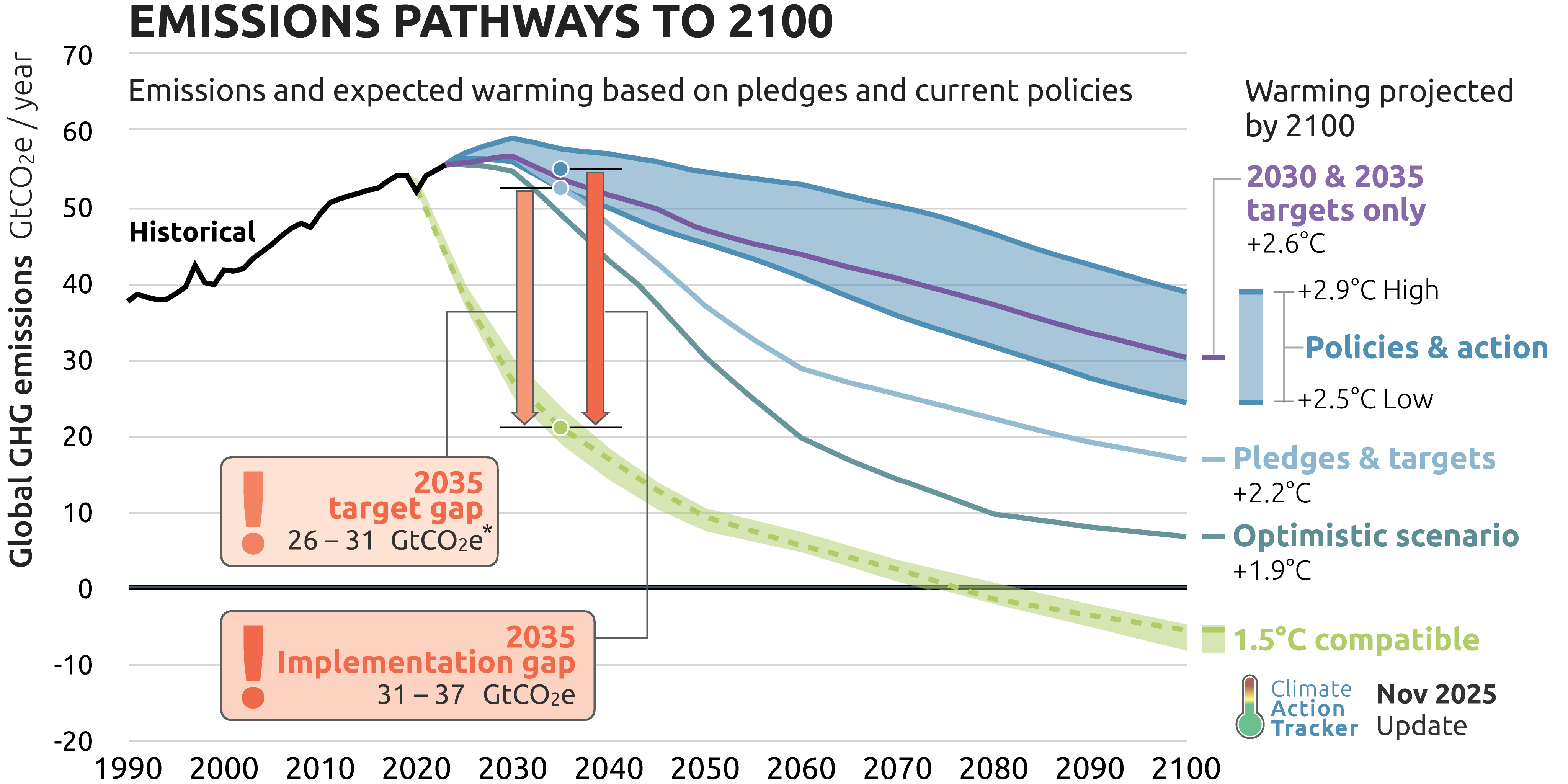
Painful though it is to admit, with current policies and actions putting the world on a path to around 2.6 degrees of warming by 2100, this may be one of the coolest summers of the rest of my life.
That’s a terrifying thought. But it’s also only part of the picture.
Robust implementation of current pledges and targets would see that fall to 2.2 degrees of warming. In an “optimistic” scenario, where targets under discussion are delivered, warming might be limited to below 2 degrees. This difference is huge.
Every single fraction of a degree of warming makes a meaningful difference to the impacts on our society, vulnerable groups, and the world at large. As humans and built environment professionals, we have profound agency to determine which of these outcomes we achieve.
Why Climate Adaptation Must Be a Professional Priority
Readers will know just how important the built environment is to climate outcomes. Simply running existing buildings accounts for around one fifth of UK emissions, before we consider construction emissions, while urban spaces are particularly vulnerable to the effects of extreme heat.
The good news is we have the solutions. Electrifying heating would zero out most operational emissions from our building stock (with the added benefit that some heat-pumps also offering cooling during periods of extreme heat). Efficient design can minimise the use of steel and concrete and create natural ventilation and shading to reduce heat gain. Urban design can deliver well-connected, nature-rich places, accelerating removal of atmospheric CO2, reducing the urban heat island effect and minimising transport emissions.
The key question, therefore, is not how we mitigate and adapt to climate change, but at what speed we do this, and how much suffering we endure as a result?
Closing the Gap Between Climate Ambition and Action
Under the balanced pathway developed by the UK Climate Change Committee to achieve net zero emissions by 2050, residential emissions must fall by 66% by 2040, while for the non-residential sector, it’s 87%. There is no fundamental reason that we couldn’t go faster than this. But instead of moving ahead, we are falling behind. Just 7% more heat pumps were installed in 2025 than in 2024, a far cry from what the pathway requires. Half of UK homes are already at risk of overheating, and that is currently projected to reach 92% of homes by 2050.
Some of this can be attributed to shortfalls in policy; the spark gap, the closure of ECO4 without a ready-to-go alternative and the ending of the public sector decarbonisation scheme to name a few.
But in many cases, the primary barrier to delivering a significant improvement in overall sustainability and resilience is neither technical nor financial. It is simply a lack of ambition.
Rebuilding Trust Through Professional Leadership
That’s where professionals come in.
As the experts on any project, built environment professionals have the opportunity to support clients to make more sustainable choices (whether large or small), helping them understand the full range of options, including their impacts on performance and cost, and advocating for ambitious approaches to climate mitigation and adaptation.
This might seem like a pipedream when margins are under pressure, and clients are appointing based primarily on up-front costs. But experience suggests that clients are open to realistic, achievable alternatives, where these are presented. Whereas if only the lowest priced option is offered, those alternative pathways are closed off from the outset.
So, every conversation and every decision should be treated as an opportunity to achieve a more sustainable, more resilient outcome, even if only by a small amount. Because in our warming world, every choice matters. And to open up those conversations, we need trust.
Recent years have seen a string of failings, from the Grenfell fire tragedy and the RAAC scandal to issues with schemes such as ECO4. In this context, clients are less likely to believe that professionals are working in their best interests, and less open to taking their recommendations.
While more robust regulation can provide confidence in a minimum level of regulatory compliance, it’s a long way from that to the sort of trust that enables conversations about the scope of a brief, the choice of suppliers or the long-term value of two different approaches.
That’s why it’s so welcome to see the sector and government emphasise the need to rebuild trust in the sector, through strengthening professionalism. Rebuilding trust is one of the four core objectives for the Single Construction Regulator, while the ongoing call for evidence to inform the new cross-sector workforce strategy envisions a “well-functioning system where buildings are safe, high-performing and sustainable; individuals and organisations are enabled to thrive; and the building system is trusted”.
Trust needs to be actively earned and reinforced over time. By taking the time to deeply understand the client’s perspective and priorities. By working to high standards, rather than seeking to cut costs and maximise profits. By proactively strengthening skills and knowledge, not treating CPD as an afterthought. And by communicating openly and honestly, rather than saying what the client wants to here. In other words, by demonstrating professionalism.
If we do that, we unlock a virtuous cycle, where professionals are given more trust, which drives better outcomes, in turn strengthening that trust and accelerating the transition to the more sustainable, resilient world we know is coming.
And that feels like something worth striving for.