)
)
Putting trees at the heart of urban planning
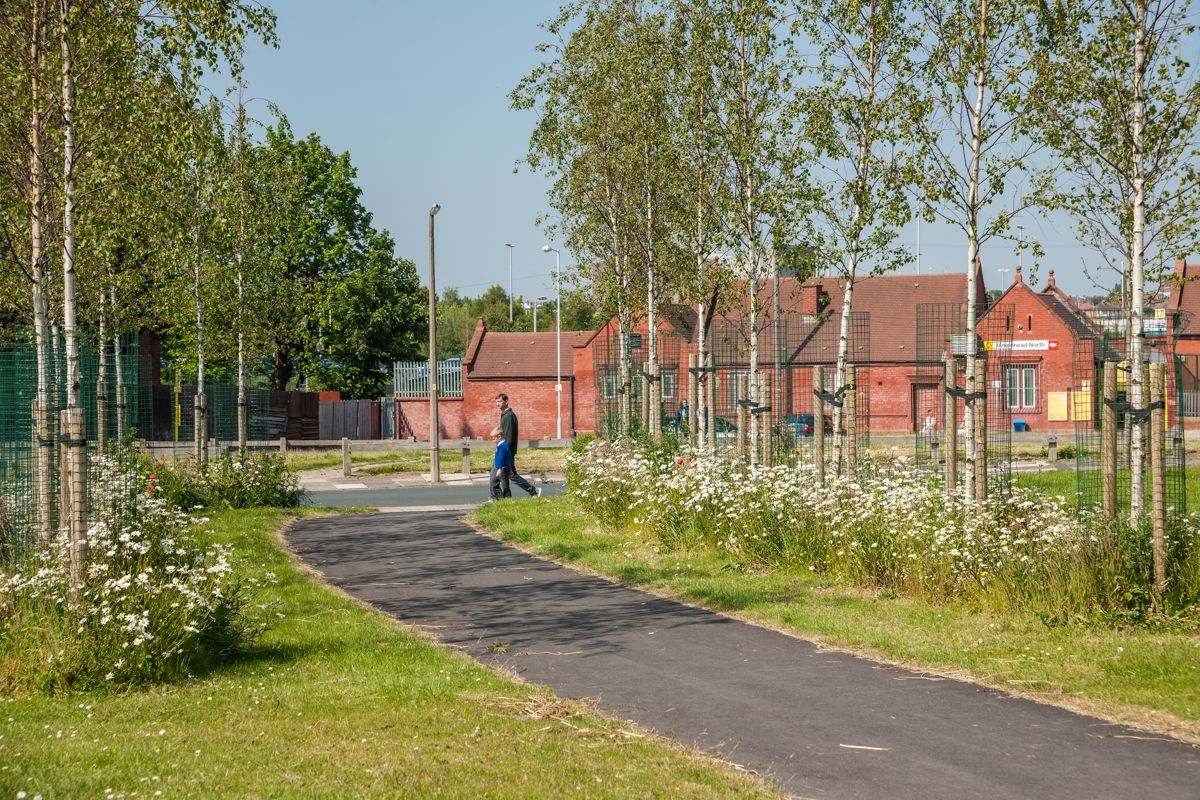
As our towns and cities face the escalating impacts of climate change and a growing public health crisis, the solution standing right outside our windows is often overlooked: the humble urban tree.
We must urgently rethink how we integrate nature into our urban landscapes. A powerful benchmark for this transformation is the 3:30:300 rule: ensuring everyone can see at least three trees from their home, achieving 30% tree canopy cover in every neighbourhood, and living within 300 metres of high-quality public green space.
The benefits of embedding trees into our urban fabric are undeniable. Trees act as giant natural air conditioners, mitigating the urban heat island effect by providing vital shade and evaporative cooling. They intercept rainfall, significantly reducing the risk of surface water flooding, and act as critical filters, removing harmful pollutants such as nitrogen dioxide and particulates from the air we breathe.
Through the Urban GreenUP Programme, working alongside Liverpool City Council and the University of Liverpool, we were able to demonstrate the tangible, measured impacts that trees and other green infrastructure can deliver in Liverpool city centre. Sites were repurposed as part of the project to introduce nature-based solutions that help address some of the environmental challenges facing the city. These interventions included planting trees and pollinator-friendly plants, establishing rain gardens and sustainable urban drainage systems, planting green walls, and improving and creating pedestrian and cyclist routes into and out of the city. The results were significant: more than 5.2 million litres of water per year diverted from sewers, improved access to green space for over 11,000 households, and more than 32 tonnes of CO₂e sequestered by trees across the project.
More recent, as yet unpublished work from the Groundswell Project Team at the University of Liverpool is showing that we can see the impacts of urban trees on neighbourhoods, with a statistically significant reduced prevalence of Cognitive Mental Disorders in areas that meet elements of the 3:30:300 standard.
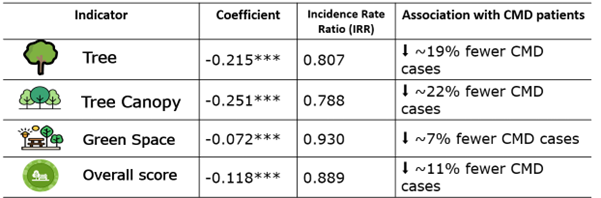
Note: All associations statistically significant (p < 0.001).
Beyond environmental protection, urban trees enrich our lives and livelihoods. They reduce stress, improve mental health, and boost local economies by increasing retail footfall and property values.
Over the past 30 years, The Mersey Forest Partnership has demonstrated what sustained commitment can achieve, planting over 10 million new trees and creating 4,000 hectares of woodland in and around our towns and cities. This work delivers a proven £10 return in natural and social capital for every £1 invested by local authorities.
We also run natural health service activities, such as forest bathing and nature conservation sessions, in small pockets of greenspace in urban environments, with profound benefits for participants’ wellbeing. Even with urban noise in the background, spending time among trees has been shown to reduce stress levels, improve mood and emotional regulation, and alleviate symptoms of depression and anxiety.
The recently refreshed Mersey Forest Plan (2025) champions the vision of “More with trees”, setting out how trees can enrich people’s lives and livelihoods, help nature flourish, and strengthen climate resilience. It establishes a clear, long-term ambition to reach 15% tree cover by 2050, pushing towards 30% in the longer term, while explicitly aspiring to meet the 3:30:300 benchmark, particularly within urban areas.
Achieving this ambitious goal will require continued collaboration across a wide range of partner organisations to find ways to incorporate trees into existing urban spaces and new developments. From policy teams to planners, highways to greenspace services, each area faces its own challenges and delivery pressures, including central government targets for more homes, whilst balancing Council budgets and delivering value for money for residents.
Working with local authority services and other partners, we are making decisions now that will shape our communities over the next 20 to 30 years—and for generations to come. Careful consideration must be given not only to where trees and greenspaces are established today, but also to how they will be managed and maintained in the future.
Done well, they will continue to deliver benefits to communities without creating challenges for local authorities further down the line.
One way we are addressing this challenge is through participation in the Nature Towns and Cities Programme, working in partnership with the National Trust, Natural England and the National Lottery Heritage Fund to embed nature across the many ways our towns and cities are planned and managed.
Research and education will also play a vital role in continuing to tell the story of urban trees—their importance to our landscapes and residents, and their role in future-proofing our towns and cities as the climate changes. We are committed to working alongside local education providers through our recently formed Ideas Lab, using the Forest as a living laboratory to help us innovate, learn, test and continually improve practice.
As we move into the next phase of our Forest Plan, we are calling on all professionals involved in shaping the spaces where we live, work and do business to play their part in creating liveable towns and cities for the future—places where we are protected from the impacts of climate change, where nature is just a few steps from our door, and where green spaces support both our mental and physical wellbeing.
Tree professionals, including those working across Community Forests, will continue to provide specialist support for urban trees and greenspaces. However, achieving greener communities requires momentum beyond the forestry and environmental sector alone. People across a wide range of roles, disciplines and communities must recognise the importance of creating living urban environments and seize every opportunity to embed nature into urban design.
We must make the 3:30:300 standard a non-negotiable benchmark for all new development and actively retrofit it into our existing settlements. Urban trees are not aesthetic afterthoughts; they are essential green infrastructure.
By weaving trees into our daily lives, we can build thriving, climate resilient towns and cities - ensuring that every resident, regardless of postcode, can share in the profound benefits of a nature-rich, well wooded environment.
Paul Nolan, Director of The Mersey Forest
Find out more about The Mersey Forest’s work: www.merseyforest.org.uk