
The Future is Live Data
Opinion Piece The Future is Live Data The UK is urgently addressing health and climate issues with its housing stock with the imminent Warm Homes
Opinion piece by Jade Lewis, Chief Executive at Sustainable Energy Association
Amidst the urgent call for climate action, our responsibility to transition to a sustainable future is paramount. Facing the challenges of our era, our built environment demands urgent attention. In this pursuit, the SEA believes in a holistic approach comprising five core principles as a philosophy to ensuring buildings are fit for the future.
Lowering energy demand through a fabric-first strategy, adopting low-carbon heating, embracing a technology-agnostic approach, ensuring high-quality performance, and enhancing health and wellbeing are vital.
Comprehensive strategies and tools are needed, from Building Passports to innovative products, that pave the way for a practical and achievable transition to net zero – creating buildings that truly are fit for the future.
In an era marked by rising concerns over climate change and the need to transition to a sustainable future, taking a stand is not just a choice but a responsibility. As we confront the challenges of our generation, we can’t shy away from tackling the built environment. Our buildings need to not only withstand the test of time as we transition to Net Zero but contribute to our collective wellbeing. To achieve this, we must champion a holistic approach that encompasses five core principles, providing a philosophy for delivering buildings that are indeed fit for the future.
Lower Energy Demand by Addressing Building Fabric First
With geopolitical events like Russia’s invasion of Ukraine pushing global energy security to the top of everyone’s agenda, reducing the UK’s energy demand must be a primary aim. A fabric-first approach, emphasising the need to consider insulating, upgrading glazing, and reducing draughts in buildings as the first step not only minimises heat loss, but also provides long -term protection against rising energy costs.
Low carbon heating technologies are often more effective in insulated buildings. By reducing energy demand, we can not only cut overall costs and energy bills, but also deliver benefits that can’t be realised by simply upgrading the heating system, such as improvements to health and wellbeing, as a result of living in a more comfortable, less damp and draughty home.
Move Away from Burning Fossil Fuels and Install Low Carbon Heating Systems
Given the dynamic changes in the energy landscape, the need to move away from burning fossil fuels is undeniable. The Government’s aim for an 80% phase out of gas and oil boiler installers by 2035 signifies the inevitable shift towards low- carbon heating systems. These technologies are already being used successfully across the world, but the transition here in the UK requires careful planning and a policy landscape that supports and guides the change, incorporating both incentives and regulations. It is important that a holistic, whole-building approach is taken, starting with fabric improvements and demand reduction, but also integrating low- carbon heating early on in the planning stages.
Adopt a Technology Agnostic Approach for Appropriate Outcomes
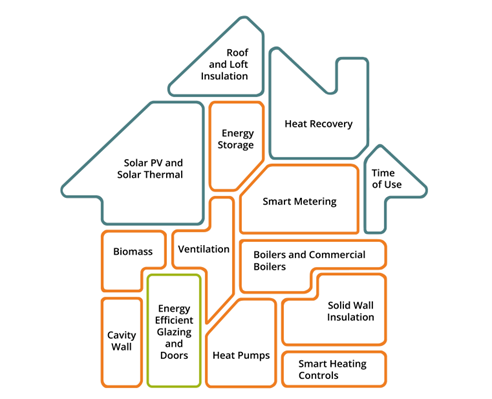
Contrary to a one-size-fits-all approach, the SEA believes in a technology-agnostic approach, selecting the most appropriate measures for each building and its occupants. Rather than picking winners and funding individual technologies, a systems-based approach considers the whole energy system, incorporating energy storage, controls, and a variety of measures that can collectively contribute to decarbonising heat and producing the best possible outcomes. In practice, this approach combines measures to deliver the right outcomes not just for carbon reduction, but for reducing costs and improving health and wellbeing. This unbiased and outcomes-based approach should be incorporated into all national policy relating to buildings and any local strategies and Local Area Energy Plans to deliver benefits to whole communities.
Ensure high quality and In-Use Performance
With most people being naturally resistant to change, the building of trust must be at the heart of the net zero transition. Ensuring that measures deliver on their promised outcomes is vital to building this trust among clients, consumers, and society at large. High-quality installations and the prevention of unintended consequences must be a top priority, and this requires a skilled workforce adhering to industry standards like PAS 2030 and PAS 2035. These standards, used in combination with industry standards such as the MCS certification for low caron heating systems, can go a long way to protecting consumers and delivering quality installations. To accurately assess a building’s efficiency, we advocate for an approach that goes beyond theoretical modelling via an Energy Performance Certificate. In-use performance, measuring actual energy use in operation rather than relying on theoretical modelling, offers a more genuine evaluation and this approach should be taken to avoid making inaccurate assumptions about the performance of installed products.
Enhance Health and Wellbeing
Many organisations are understandably focused on cutting carbon and delivering net zero but beyond this, addressing the energy efficiency offers a unique opportunity to enhance health and well-being. A minimum of 90% of our time is spend indoors, making the quality of our indoor environment a critical factor in our overall wellbeing as a nation. Poor quality homes contribute to health issues, from mould-related illnesses to the impacts of cold and damp conditions or overheating. A holistic approach that encompasses measures to improve air quality, acoustics, lighting, and adaption to climate change, should be considered both a moral imperative and cost-effective long-term investment.
Tools to Deliver:
To deliver on the five principles summarised above, a set of robust tools and strategies is needed.
Advanced Building Assessments such as Building Passports:
There are many software packages and digital solutions that can help to measure and model a building’s thermal and energy performance, and other services it provides. The SEA has long advocated for Building Passports that can provide more advanced data than Energy Performance Certificates (EPCs), offering historical information and creating a plan for future energy efficiency improvements, potentially linked to general home improvements.
Necessary Knowledge and Skills:
In order to deliver all of these technologies and solutions, we are going to need a range of skills and professions – a workforce capable of designing, building and retrofitting buildings in a much more holistic way.
It is important to learn from what has been done so far and share knowledge to increase the rate of learning across the UK. Also, to create a culture of continued professional development to ensure competence and keeping up to speed with the latest thinking and innovation.
Initiatives like the National Retrofit Hub and Welsh Hwb can help to play a vital role in upskilling and shared learning.
Independent Advice for Occupants:
The challenge of introducing new, technical low-carbon technologies necessitates simple and easily understandable advice for occupants. Independent advice, guiding people through the transition journey, forms a basis of successful retrofit and new build schemes.
Proven and Innovative Products and Techniques:
Innovations, spanning products, solutions, and systems, offer new dimensions to retrofitting and new build. Also, new techniques like advanced manufacturing, Modern Methods of Construction (MMC), and digital technologies contribute to improved productivity and outcomes.
Striking a balance between consumer protection, outcome assurance, and driving innovation is crucial. Overcoming barriers to the entry of innovative products involves rigorous testing and evidence gathering, aligning with initiatives like the Energy Company Obligation and Welsh Government’s Optimised RetroFit Programme (ORP).
Consider Green Financing Options:
There is a need to fund work for those in fuel poverty and most in need of home improvements. Funding is already available via Government schemes like the Social Housing Decarbonisation Fund, Energy Company Obligation, Home Upgrade Scheme, Local Authority Delivery Scheme, etc.
The Government could do more to stimulate the able to pay to invest in retrofit, for example via Minimum Energy Efficiency Standards and Stamp Duty Tax linked to the energy performance of the building. This could also help in creating increased market value of a more energy-efficient property.
New green mortgages and loans are popping up in the market and investors are increasingly showing more interest.
Taking a stand for Buildings Fit for the Future
By embracing these tools and principles, the Sustainable Energy Association believes that the transition to net zero can become not just an aspirational goal but a practical and achievable reality. Then we will be much closer to delivering buildings that really are fit for the future.

Opinion Piece The Future is Live Data The UK is urgently addressing health and climate issues with its housing stock with the imminent Warm Homes
In a landmark move for the UK construction sector, UK Construction Week London and Futurebuild will come together from 12–14 May 2026, creating a new
Opinion Piece The numbers don’t lie: Why the built environment must act now In 2021 the UK Green Building Council published its Roadmap to Zero
