
The Future is Live Data
Opinion Piece The Future is Live Data The UK is urgently addressing health and climate issues with its housing stock with the imminent Warm Homes

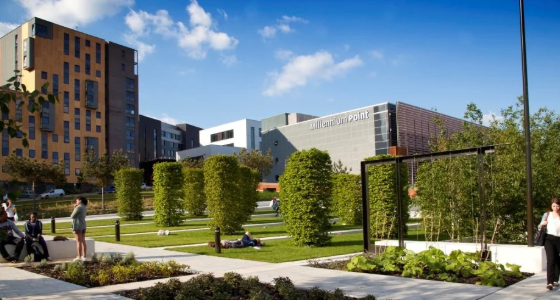
Birmingham’s journey from “concrete jungle” to a global leader in biophilic design proves that green transformation is possible. Once dominated by grey infrastructure, the city now stands alongside San Francisco, Wellington, and Oslo as part of a network of cities putting nature at the heart of decision-making.
In an inspiring conversation with the Journal of Biophilic Design, Nick Grayson, Birmingham’s former climate change and sustainability manager, reveals how he helped Birmingham City council transform urban living by putting nature at the heart of decision-making and also shares ideas on how we too can help shape the future of our towns and cities.
His work made the “invisible visible” — mapping climate risk, exposing inequalities, and proving that access to green space directly shapes life expectancy.
Nick’s message is urgent and hopeful: sustainable cities aren’t built by chance, but by reimagining our relationship with nature. The blueprint exists — the question is, are we ready to build it. “Cities are themselves generating 80% of global emissions and 75 to 80% of nature loss around the world.”
Nick realised that urban spaces needed a fundamental mindset shift. “Nature isn’t something we add on or allow to exist in cities,” he explains. “We need to recognise how wholly dependent we are on it, both at an individual and global scale.”
Birmingham’s transformation has become a global blueprint for urban regeneration. Nick’s shorthand for a biophilic city is deceptively simple yet has a profound impact for change: “Cities that put nature at the heart of their decision making.”
“We aren’t short of money. We’re short of imagination and proper governance,” he says. “There isn’t a single example of a sustainable city anywhere in the world…The biggest failure of our time is saying we haven’t got any money.”
On the 17 November 2025, at the Biophilic Design Conference, Nick will also be sharing his vision. By creating ecosystem assessments and climate risk maps, he made the “invisible visible”. These visual representations showed stark inequalities – demonstrating how green space availability directly correlated with life expectancy and quality of life.
“Every city in the world should do a climate risk and vulnerability assessment,” Nick argues. By combining multiple data sets, cities can illustrate existing crises – economic, social, and environmental – and understand how these interconnect.
We are living in an urgent global challenge. Approximately 20 billion cities of a million people are being created due to rapid urbanisation, but do they all have a sustainable model?
The ultimate goal, according to Nick, is creating biophilic communities, towns and cities where every person can engage with nature daily. “A biophilic city regenerates human consciousness,” he explains, “making us more aware of our connections and the richness of planet Earth.”
Listening to him, we can all take the practical steps he recommends including engaging local communities, creating green infrastructure master plans, developing fair park standards and prioritising funding for underserved areas.
His advice for designers and urban planners is both practical and inspirational. “Consider what elements of change can be achieved through whatever you’re planning. Make it as rich as possible and involve as many players as possible.”
Nick’s work proves that transformation is possible. Birmingham, once considered a concrete jungle, is now part of a global network of biophilic cities alongside San Francisco, Wellington, and Oslo.
His parting vision is both simple and profound: cities where nature is integral to daily life, where people feel connected to the land, and where human consciousness is regenerated through meaningful environmental engagement.
For urban designers, planners, and citizens alike, Nick Grayson’s message is clear: change is not just possible, it’s imperative. By reimagining our relationship with nature, we can create cities that are not just sustainable, but truly alive.
As Nick poignantly states, drawing inspiration from astronauts viewing Earth from space, we need a perspective shift – one that sees our urban environments as living, breathing ecosystems where humans and nature coexist in harmony.
The future of our cities depends on our willingness to embrace this vision. Are we ready to transform?
Watch the video interview here: https://journalofbiophilicdesign.com/podcast-journal-of-biophilic-design/nick-grayson
Book tickets for the second Biophilic Design Conference, Westminster London, to meet Nick Grayson who will be sharing more knowledge and also activating a workshop www.biophilicdesignconference.com
With thanks for Futurebuild for supporting us and our shared vision for creating a safer, healthier, happier, more sustainable and equitable future.

Opinion Piece The Future is Live Data The UK is urgently addressing health and climate issues with its housing stock with the imminent Warm Homes
In a landmark move for the UK construction sector, UK Construction Week London and Futurebuild will come together from 12–14 May 2026, creating a new
Opinion Piece The numbers don’t lie: Why the built environment must act now In 2021 the UK Green Building Council published its Roadmap to Zero