
Making the right decisions and in the right order to take the right actions… now!
Opinion Piece Making the right decisions and in the right order to take the right actions… now! A year ago we reflected on the polycrisis
The UK is urgently addressing health and climate issues with its housing stock with the imminent Warm Homes Plan seeking to upgrade 5 million homes over the following four years.
To meet the scale of this challenge the sector needs to scale x10 and radically change its approach to industrialise. The current paradigm of assessing buildings based on their design (‘as designed’) must change to one that uses live data (‘as built’). We simply don’t understand our existing buildings well enough: how they perform, what they are made of, and how they affect us.
Using an inputs-based approach (Energy Performance Certificates) to estimate energy efficiency, for example, leads to oversized heating systems and overstated costs to decarbonise stock.
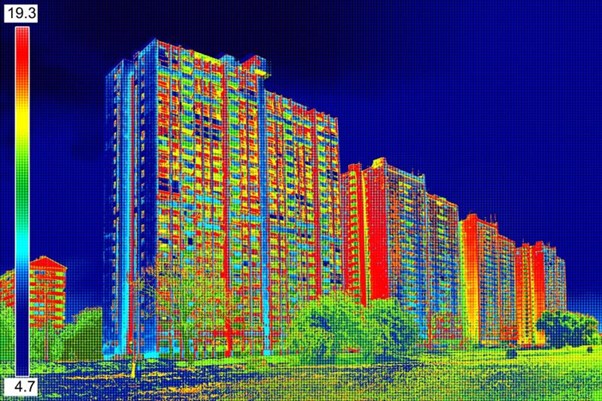
Work by innovative companies such as Kestrix and Build Test Solutions have demonstrated heat loss calculations are wrong by >25% in nearly half of all EPCs. Both companies use technology to measure the heat loss of a building accurately, fast and low cost.
Why are we still making decisions based on EPCs, which are costly, when the total number of active, unique domestic and non-domestic properties in the UK with a current EPC is far lower than the number of smart meters installed.
Buildings also have a huge impact on the occupants. The UK health system spends billions treating the symptoms of poor housing. A combination of factors in how we build, maintain and use our homes is causing and exacerbating chronic health conditions and leading to excess, avoidable deaths.
Public Health Wales found that every £1 spent on home adaptations and modifications generates £7.50 of cost savings for health and social care. Their analysis also found that every £1 spent on insulation interventions provides a return of £1.87. This was calculated through a reduction in GP visits, fewer hospital admissions and reduction in childhood asthma.
We are at an innovation tipping point where low-cost technologies can be rapidly deployed to measure the outcomes we want from our built environment. The technology exists to identify and quantify where a building loses heat, isn’t sufficiently airtight or has high risk of damp and mould.
The opportunity is ripe for the UK to adopt a data-driven approach to home upgrades that deliver the health and carbon impacts required by government policy at far lower costs than currently mooted.
It is for this reason a data-driven approach is also being demanded by major banks who need to understand the risk in their portfolio to lend against solving it. This would unlock green finance and drive investment.
Planning the installation of fabric measures at scale requires detailed information on the geometry of buildings and common issues across archetypes. Technology is again providing solutions to acquire this data at scale and in a form that can be used directly by offsite factory processes. Combining LIDAR scanning with visual and thermal images essentially creates a data-rich ‘as-is’ 3D model of neighbourhoods to aid planning of street-by-street retrofit which is particularly powerful when layered up with live performance data and information that supports energy planning such as network data.
The latter is critical to retrofit at pace due to the energy networks potentially being a constraining factor. However, as buildings are upgraded they become ‘active’ parts of the energy system rather than simply loads. Buildings are increasingly capable of generating, storing and managing energy and enabling a more flexible grid as a result.
Having the data to plan urban developments in a more holistic way will help local and combined authorities to move faster and package projects into a pipeline that becomes more investable.
The UK has long been world leading on applying data to managing construction. Thanks to government support, the UK are pioneers in applying Building Information Management (BIM) to major projects and have helped train over governments to do the same, increasing exports of our services. As technology evolves every faster, this innovation tipping point means the data opportunity reaches deep into new construction too. Industrialising our approach to new infrastructure and buildings requires a system that is digitised. One where we can use tools such as AI to interrogate pipelines and find commonalities that can be standardised and aggregated then made more visible to manufacturers.
As we move to more standardised, process-driven approaches within construction, the live data we collect on how a building or asset performs can then be used in a feedback loop to improve designs to deliver better outcomes. This, alongside detailed data on every component of a building, would lead to improvements in safety, performance, and sustainability of our built environment.
Written by:
Dr Mike Pitts
Deputy Director – Heat & Buildings
Innovate UK

Opinion Piece Making the right decisions and in the right order to take the right actions… now! A year ago we reflected on the polycrisis
Opinion Piece The Future is Live Data The UK is urgently addressing health and climate issues with its housing stock with the imminent Warm Homes
In a landmark move for the UK construction sector, UK Construction Week London and Futurebuild will come together from 12–14 May 2026, creating a new