Greater Manchester Combined Authority

Greater Manchester is widely regarded as one of the UK’s more advanced city regions for retrofit planning and delivery, embedding retrofit within wider housing, climate and economic strategies. The city region has set a carbon neutral target for 2038 and treats retrofit as a route to warmer homes, lower bills and good local jobs as well as emissions reduction.

Leadership is coordinated at combined authority level to tackle retrofit as a system challenge rather than isolated projects. Through RetrofitGM and the Retrofit Task Force, Greater Manchester has focused on capacity, funding alignment and place based programmes that can operate at scale, making it a relevant case study for National Retrofit Conference delegates interested in practical, investable delivery models. 
 

GMCA
 

GM Home

Region and political leadership

Greater Manchester is a mayoral combined authority led by the Mayor of Greater Manchester, Andy Burnham. Greater Manchester Combined Authority (GMCA) brings together 10 local authorities with devolved powers covering housing, transport, skills, planning and climate policy. Retrofit is positioned as a core route to the region’s 2038 carbon neutral goal and a means to improve health and affordability for residents.


Delivery approach summary

Greater Manchester’s approach is anchored by the RetrofitGM programme and the Retrofit Task Force established in 2021. The model emphasises fabric first upgrades, low carbon heating, targeted support for fuel-poor households and a whole system plan to build delivery capacity across all 10 boroughs. GMCA coordinates at regional level with local authorities and partners delivering on the ground. The scale is significant, with over 880,000 homes and about 2,700 public buildings requiring some level of retrofit by 2038. 

GMCA

Key people

Key figures associated with retrofit include Andy Burnham, Mayor of Greater Manchester, and Mark Atherton, GMCA Director of Environment. GMCA programme leads involved in Warm Homes funding and delivery also feature in the NRC agenda, reflecting the region’s active role in shaping largescale programmes.

andy
mark atherton

Main policy documents and strategies with links

The regional framework includes the RetrofitGM strategy and action plan and Greater Manchester’s Five-Year Environment Plan, all aligned to the 2038 carbon neutral target. Together these documents set out a plan to reduce emissions, tackle fuel poverty and create jobs through retrofit at scale.

Funding Overview

Warm Homes: Social Housing Fund:
GMCA plays a coordinating role across registered providers delivering fabric‑first retrofit at scale, forming a core part of the region’s social housing pipeline.
Warm Homes: Local Grant:
Area‑based funding supporting low‑income households in privately owned and rented homes, targeted at fuel poverty and EPC improvement.
Energy Company Obligation programmes:
ECO has been actively used across Greater Manchester, with ECO4 Flex supporting delivery and ECO5 expected to continue this role from 2026.
Great British Insulation Scheme:
A national scheme focused on lower‑cost insulation measures such as loft and cavity wall insulation. In Greater Manchester, GBIS has been used alongside ECO and local authority‑led programmes to support fabric‑first upgrades in eligible homes, helping to extend the reach of retrofit activity and maintain delivery momentum across neighbourhoods.
Public Building Retrofit Fund:
A dedicated multi‑year capital fund supporting whole‑building retrofit of schools, council buildings and NHS estates across the city region.

These routes sit alongside prior investment in housing and public buildings and are structured to support whole building upgrades and sustained delivery beyond single grant cycles.

Delivery vehicles and procurement routes

GMCA coordinates delivery with local authorities acting as delivery bodies and registered providers participating through consortium arrangements.

Public sector organisations can access capital support for whole building retrofits, with procurement increasingly geared to performance, quality and the ability to deliver at scale across neighbourhoods and estates.

GMCA continues to explore finance and delivery models suited to long-term pipelines rather than one-off projects. 

Skills and workforce activity

Workforce development is a central pillar. A Retrofit Skills Hub has been established to train over 1,000 people, with wider upskilling planned across the existing construction workforce. The region links retrofit to job creation and supply chain growth, positioning retrofit as a significant source of future employment in the local green economy. 

Current retrofit programmes

Live and recent activity includes largescale social housing upgrades through Warm Homes funding, area-based schemes for fuel-poor households, and a sustained public building programme across schools, leisure centres and health estates. 

Innovation and testing are supported through the Energy House 2.0 facility in Salford which is helping trial technologies and whole home approaches that can inform delivery at scale.

Pipeline opportunities

The forward pipeline is substantial given the scale of homes and public buildings targeted for 2038, ongoing Warm Homes funding rounds and an expanding public estate programme. The region is looking for partners who can support consistent, quality delivery at scale across multiple programmes and geographies within the city region. 

How you can connect at the National Retrofit Conference at Futurebuild

NRC

Connect with speakers and exhibitors linked to this region

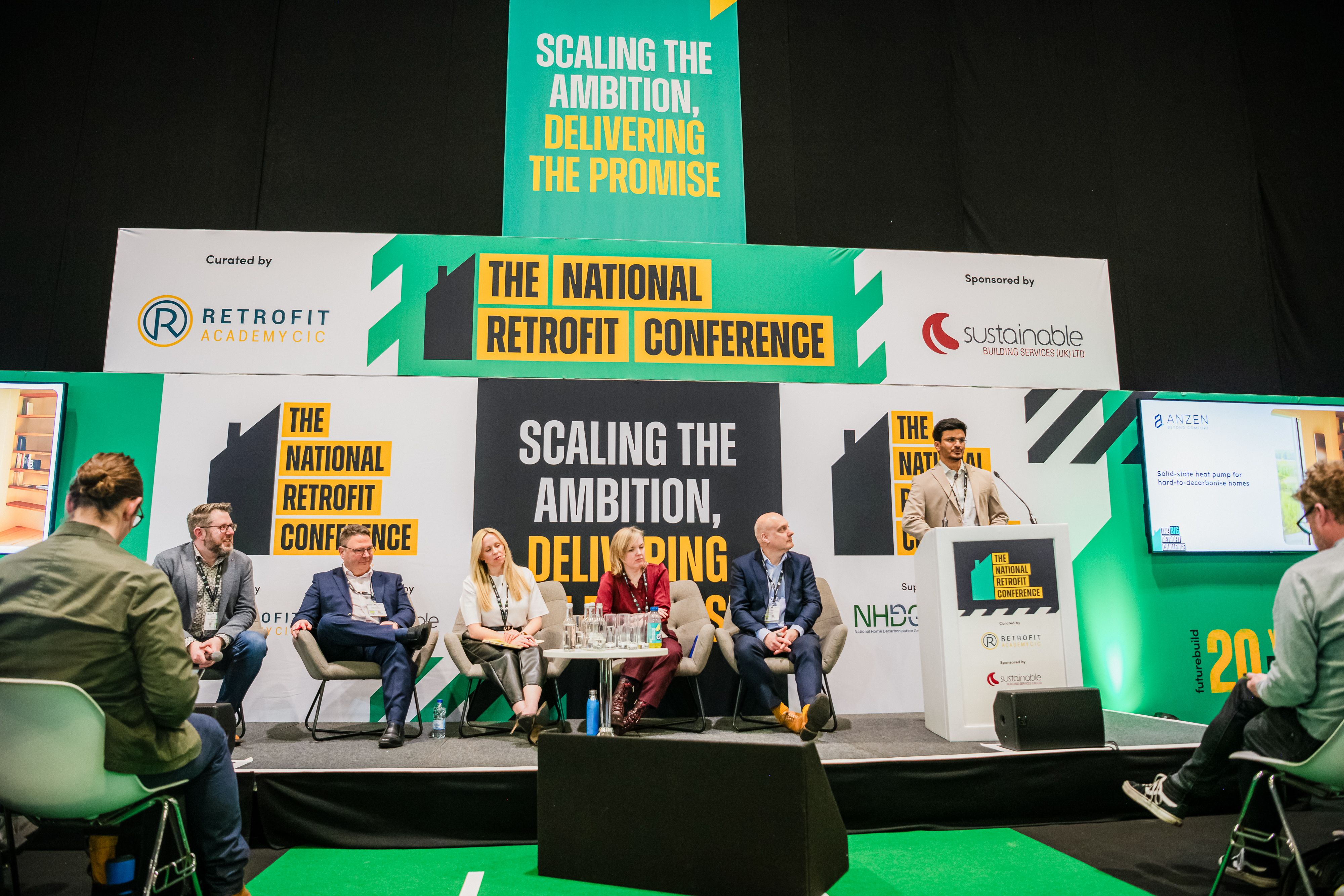
Greater Manchester has dedicated content in the National Retrofit Conference timetable, including a session on the region’s retrofit journey, systemic delivery and Warm Homes funding streams, with GMCA officers and programme leads speaking. This gives delegates a direct route to understand how the combined authority is structuring delivery and what lessons may be transferable to other regions.

Suggested engagement opportunities

Delegates should use the National Retrofit Conference to engage with GMCA officers on programme design, funding alignment and delivery partnerships, compare place-based approaches across boroughs, and explore how suppliers can match capacity and quality requirements for long-term pipelines. The region offers practical insights into how devolved leadership can translate policy into largescale, investable delivery models.