York and North Yorkshire profile

The draft Retrofit Strategy (2025–2030) positions York and North Yorkshire as a testbed for innovative retrofit, especially in heritage and rural contexts.

Although the strategy is still in draft, the region has already built strong foundations by establishing a Task and Finish Group to shape the strategy. There is also strong local council engagement and delivery capacity. The region’s unique assets in heritage-led retrofit expertise, rural and coastal demonstrator projects and a thriving bio-based materials sector are also strong supporters of retrofit goals.

 

Yorkshire
 

Yorkshire home

Region and political leadership

The York and North Yorkshire Combined Authority (YNYCA) was established in May 2024 and covers the City of York and North Yorkshire Council. 

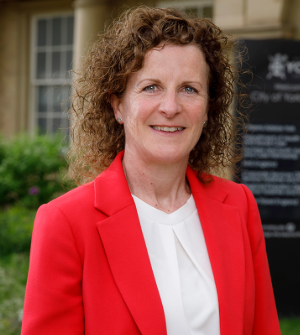
David Skaith (Labour) is the first Mayor of YNYCA. He chairs the Combined Authority and sets the strategic direction for the region. The Combined Authority Board includes the political leaders of York and North Yorkshire and both councils send representatives to the Combined Authority and retain responsibility for local service delivery.


Delivery approach summary

The region’s Retrofit Strategy sets out a structured approach with clear priorities, and the delivery of this strategy is supported by a collaborative governance model. A Task and Finish Group oversees strategy development and alignment with the region’s Routemap to Carbon Negative. 

The delivery approach has been designed to be heritage-sensitive, utilise the region’s bio-based materials resources (such as hemp and sheep’s wool) and explore rural and off-gas solutions. There is also a concerted effort to increase workforce development to address skills shortages.

Key people

As Mayor, David Skaith is one of the leading figures in the region in retrofit. Other key figures include:

  • Leader, City of York Council, Claire Douglas (Labour): Combined Authority Board Member and leads York’s climate, housing and planning agenda. 
  • Leader, North Yorkshire Council, Carl Les (Conservative): Combined Authority Board Member and a Portfolio Holder for Housing.
  • Deputy Mayor & Deputy Leader, City of York Council, Pete Kilbane (Labour): Portfolio Holder for Transport.
  • Deputy Leader, North Yorkshire Council, Gareth Dadd (Conservative): Combined Authority Board Member and Executive Member for Finance & Resources.


andy
mark atherton

Main policy documents and strategies with links

The core document is the York and North Yorkshire Retrofit Strategy (Draft, 2025–2030). This is the region’s dedicated retrofit strategy, forming the “Heat and Buildings” component of the Routemap to Carbon Negative, which is currently being refreshed.

Another key document is the City of York’s Climate Change Strategy, which provides York’s local authority-level climate framework, including commitments on buildings, energy efficiency and fuel poverty. The City of York’s Retrofit Action Plan is also useful. York’s Housing and Retrofit Programme provides a view of the city’s pipeline, funding, and delivery routes, adding context for regional alignment.

Funding overview

While the region does not yet have a consolidated retrofit fund, active funding includes the UK Shared Prosperity Fund (UKSPF), the Warm Homes: Social Housing Fund and the Local Energy Advice Demonstrator (LEAD). 

The region also has access to other national schemes, including the Boiler Upgrade Scheme (BUS), ECO4/ECO+ and the Public Sector Decarbonisation Scheme (PSDS).

Delivery vehicles and procurement routes

As the region is making a push towards a single retrofit delivery body, it is currently delivering across a mixed delivery ecosystem, which includes local authorities, housing associations and Innovate UK demonstrators.

Local authorities remain the core delivery vehicles for most activity. Procurement is handled through several routes, including open tender, existing frameworks, and mini-competitions for specific lots. The York and North Yorkshire Housing Partnership is a group of 23 housing associations that uses procurement routes such as consortia frameworks, direct award to long-term contractors and lot-based procurement.

The City of York’s Retrofit One-Stop-Shop for York (ROSSY) is the closest thing the region has to a delivery vehicle for private-sector retrofit and it is seen as the protype for a regional one-stop-shop (see below).

Skills and workforce activity

Regional assessments within the draft Retrofit Strategy highlight a significant shortage of skilled labour relative to the scale of retrofit required, with workforce capacity identified as a critical constraint on delivering upgrades across the region’s homes, businesses and public buildings.

In addition, the Retrofit Strategy identifies a broad but fragmented local supply chain, with retrofit‑related businesses concentrated around urban centres and limited coverage in rural and coastal areas. The strategy highlights particular gaps in specialist areas such as insulation and heritage‑appropriate retrofit, which constrain delivery at scale beyond the main towns.

Training provision is described as geographically uneven and reliant on a small number of further education providers. The strategy notes low demand for formal retrofit qualifications, challenges in recruiting tutors with appropriate experience, and limited capacity to upskill existing teaching staff at pace.

The strategy also identifies retraining workers from other industries as a major opportunity, particularly from sectors expected to contract as the economy decarbonises, with transferable skills seen as a key part of addressing future workforce needs.

Current retrofit programmes

The most advanced private sector retrofit delivery model is the Retrofit One-Stop-Shop for York (ROSSY). Funded by Innovate UK and led by the City of York, this is providing a full retrofit advice and assessment service for York residents and includes the York Retrofit Network.

The UK Shared Prosperity Fund (UKSPF), now delivered by YNYCA, is funding a range of retrofit/decarbonisation projects for businesses and community groups and the Social Housing Decarbonisation Fund (SHDF) is being led by Broadacres Housing Association delivering £2.4m in funding to retrofit 400 homes. Another large programme is the Net Zero Fund, which is being led by Yorkshire North and East Methodist Church to retrofit 20 churches using over £700,000 of funding. 

Pipeline opportunities

There is a huge domestic retrofit requirement on the horizon, with a need to retrofit nearly 250,000 homes to EPC C or higher and retrofit over 62% of existing business premises by 2038. The Local Area Energy Plans also identify geographic clusters where retrofit can be delivered at scale. These zones represent place‑based procurement opportunities for aggregated delivery across vale, moors and coastal homes, the A1 corridor, York, Harrogate and Skipton Dales.

This creates opportunities for energy‑service style delivery models, where providers fund and deliver energy upgrades and are repaid through long‑term savings, as well as procurement aligned to the Public Sector Decarbonisation Scheme, using government funding to upgrade public buildings through established national frameworks.

With the development of a regional one-stop-shop imminent, there are also impending opportunities for programme management and other digital service providers.

Sample Image

National Retrofit Conference connections (attending speakers or exhibitors linked to this region):

York and North Yorkshire are referenced within the National Retrofit Conference as part of the wider discussion on devolved delivery and regional approaches to retrofit, particularly in sessions exploring devolution, place-based programmes and scaling delivery beyond core city regions. 

Suggested engagement opportunities at National Retrofit Conference

Delegates with an interest in York and North Yorkshire should use the National Retrofit Conference to engage with speakers and panellists involved in devolution, combined authority delivery, rural retrofit challenges and regional programme design to draw out lessons applicable to the region. 

Conversations around adapting large-scale delivery models for mixed urban and rural contexts, aligning national policy with emerging mayoral and combined authority structures and building investable pipelines where delivery capacity is more dispersed will be particularly relevant.